



What Causes Emergency Truck Breakdowns Most Often?
What Really Causes Emergency Commercial Truck Breakdowns

FSDAVCFEBFEVSDDVFSD

FSDAVCFEBFEVSDDVFSD

FSDAVCFEBFEVSDDVFSD
Why Emergency Truck Breakdowns Happen More Than They Should
Emergency truck breakdowns rarely happen without warning. In most cases, there are signs in the days or weeks before a truck fails on the road, including unusual sounds, warning lights, changes in engine performance, or small fluid leaks that get ignored during busy schedules. Understanding the most common causes of commercial truck breakdowns can help drivers and fleet managers recognize these early signals and take action before a minor issue turns into a costly roadside emergency.
Diesel trucks operate under significant mechanical stress, and certain systems are more prone to failure than others when maintenance is delayed or skipped. This article walks through the leading causes of emergency truck breakdowns so that owner-operators, drivers, and fleet managers can better protect their vehicles, their schedules, and their bottom line.
Why Emergency Truck Breakdowns Happen More Than They Should
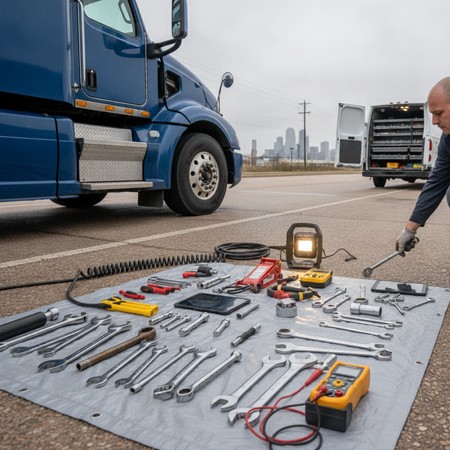
Emergency truck breakdowns rarely happen without warning. In most cases, there are signs in the days or weeks before a truck fails on the road, including unusual sounds, warning lights, changes in engine performance, or small fluid leaks that get ignored during busy schedules. Understanding the most common causes of commercial truck breakdowns can help drivers and fleet managers recognize these early signals and take action before a minor issue turns into a costly roadside emergency.
Diesel trucks operate under significant mechanical stress, and certain systems are more prone to failure than others when maintenance is delayed or skipped. This article walks through the leading causes of emergency truck breakdowns so that owner-operators, drivers, and fleet managers can better protect their vehicles, their schedules, and their bottom line.
The Most Common Mechanical Causes of Diesel Truck Failures
Engine overheating is one of the most common reasons diesel trucks end up stranded on the side of the road. Commercial engines generate enormous heat during normal operation, and the cooling system works continuously to keep temperatures within a safe range. When coolant levels drop, hoses crack, the radiator becomes clogged, or the thermostat fails, heat builds up faster than the system can handle. Left unchecked, overheating causes serious internal damage and can sideline a truck for days.
Oil-related failures follow a similar pattern. Running on low or degraded oil increases friction between moving parts, accelerating wear and raising the risk of sudden mechanical failure. Diesel engines used in commercial applications accumulate miles quickly, and oil that has broken down past its useful life puts significant stress on the engine. Drivers who ignore oil change intervals or skip checks are far more likely to experience a preventable failure.
Fuel system issues, while less dramatic, can be just as disruptive. A clogged fuel filter or contaminated diesel supply can starve the engine of the fuel it needs, causing rough running or a complete shutdown. Staying on a regular filter replacement schedule and being careful about fuel sources goes a long way toward keeping the engine running cleanly.
How Brake and Tire Failures Cause Roadside Emergencies
Brake system failures are among the most dangerous causes of commercial truck emergencies. Air brake systems on heavy-duty trucks require consistent pressure to function correctly, and any leak in the lines, worn brake components, or moisture in the system can reduce stopping power quickly. Given the weight these vehicles carry, even a modest reduction in braking ability creates serious safety risks.
Tire failures are another leading cause of unexpected roadside stops. A tire that loses pressure suddenly at highway speeds can cause the driver to lose control of the vehicle. Blowouts on rear axle duals may be less immediately destabilizing, but they still pose a risk and can damage surrounding components if the truck continues moving.
Both brake and tire issues share a key characteristic: they often develop gradually before causing a sudden failure. Regular brake inspections and tire pressure checks are inexpensive compared to the cost of a breakdown, a damaged load, or an accident.
How Brake and Tire Failures Cause Roadside Emergencies
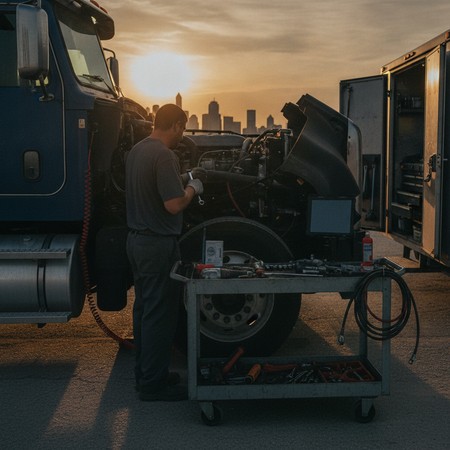
Brake system failures are among the most dangerous causes of commercial truck emergencies. Air brake systems on heavy-duty trucks require consistent pressure to function correctly, and any leak in the lines, worn brake components, or moisture in the system can reduce stopping power quickly. Given the weight these vehicles carry, even a modest reduction in braking ability creates serious safety risks.
Tire failures are another leading cause of unexpected roadside stops. A tire that loses pressure suddenly at highway speeds can cause the driver to lose control of the vehicle. Blowouts on rear axle duals may be less immediately destabilizing, but they still pose a risk and can damage surrounding components if the truck continues moving.
Both brake and tire issues share a key characteristic: they often develop gradually before causing a sudden failure. Regular brake inspections and tire pressure checks are inexpensive compared to the cost of a breakdown, a damaged load, or an accident.
Coolant leaks and overheating are among the most damaging problems a truck can experience, and they often develop gradually before becoming serious. A slow leak from a hose, water pump, or radiator can go unnoticed during routine pre-trip checks until the engine temperature climbs into the danger zone on the road. By that point, the truck is already at risk of a blown head gasket or warped engine components, both of which are costly to address.
Checking coolant levels, inspecting hoses for soft spots or cracking, and monitoring the temperature gauge during operation are simple habits that pay off significantly over time. Drivers who notice the temperature rising abnormally or see steam from under the hood should pull over immediately and call for help rather than trying to push the truck further down the road.
Why Electrical Problems Ground Trucks Without Warning
Brake system failures are another frequent cause of emergency stops, and they deserve special attention given the safety consequences involved. Air brake systems on commercial trucks rely on proper pressure, functioning chambers, and maintained slack adjusters. When any component in that chain degrades or fails, stopping distances increase and the risk of an accident rises considerably. Drivers should listen for unusual hissing sounds, monitor brake fade during descending grades, and take note of any pulling during braking.
Fuel system problems also cause a surprising number of roadside breakdowns. Contaminated fuel, clogged filters, failing injectors, and fuel pump issues can all cause a truck to lose power or shut down unexpectedly. Diesel engines are particularly sensitive to water contamination in the fuel, which can occur during refueling at lower-quality stations or from condensation in tanks during temperature changes.
Electrical failures round out the most common causes of commercial truck breakdowns. Modern diesel trucks rely on complex electrical systems that control everything from the engine management module to trailer lighting and auxiliary systems. A failing alternator, corroded battery terminals, damaged wiring harnesses, or faulty sensors can trigger warning lights, cause unexpected shutdowns, or prevent a truck from starting entirely. Having a technician perform periodic electrical system checks helps catch these issues before they cause an unplanned stop.
Warning Signs Drivers Should Never Ignore on the Road
Warning lights exist for a reason, but many drivers develop a habit of resetting them without investigating the underlying cause. A check engine light that returns after being cleared is telling you something specific about the truck's condition. Ignoring it does not make the problem go away.
Temperature gauges that creep toward the high end of the range, even briefly, are another warning worth stopping for. Running a diesel engine at elevated temperatures for even a short period can cause gasket damage and warped components that are expensive to address. A quick stop to check coolant level and look for leaks is far preferable to a full engine failure.
Low air pressure warnings in the braking system should never be dismissed. Air brakes on commercial trucks depend on consistent system pressure to function correctly. A slow leak in the air supply can reduce braking effectiveness without the driver noticing until stopping distance increases significantly.
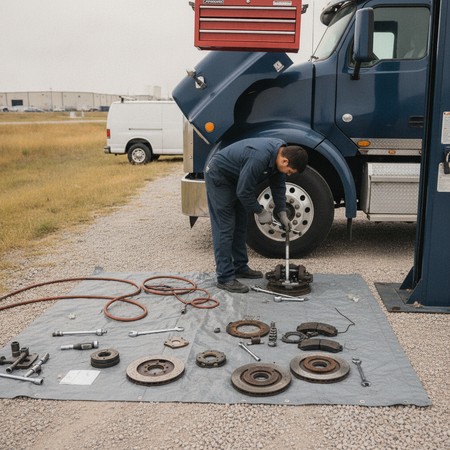
When a truck does break down, the decisions made in the first few minutes matter. Pulling safely to the shoulder, activating hazard lights, setting out triangles or flares, and calling a qualified mobile diesel technician are the right steps in that order. Attempting to diagnose or repair a complex problem roadside without proper training and equipment can make the situation worse and create additional safety risks for the driver and others on the road.
A mobile repair technician can arrive with diagnostic tools, replacement parts, and the experience needed to assess the situation accurately and get the truck moving again as quickly as possible. For issues that cannot be resolved on the spot, the technician can advise on the safest next steps and help the driver and dispatcher make informed decisions about towing or temporary solutions. Quick, professional response time reduces both downtime and risk.
Getting Your Truck Back on the Road Faster
Preventing emergency truck breakdowns comes down to consistent attention and a willingness to act on small warning signs before they become big problems. Drivers and fleet managers who treat routine maintenance as a priority rather than an afterthought tend to experience far fewer unplanned roadside stops. The cost of a missed oil change or delayed brake inspection is almost always greater than the cost of catching the issue early during a scheduled service visit.
Mobile diesel repair services make it easier than ever to keep trucks properly maintained without pulling them off the road for extended periods. A technician can come to your location for routine inspections, fluid checks, belt replacements, and diagnostics, so trucks spend more time hauling and less time waiting in a shop bay. Scheduling regular preventative maintenance is one of the most cost-effective decisions a fleet manager or owner-operator can make.
If your truck has broken down or you want to get ahead of potential problems, our team is available to help. We respond quickly to emergency calls and also work with fleet operators to build maintenance schedules that match their routes and operational demands. Reach out to get started and keep your truck running safely and reliably.
Dallas Heavy Duty Service
Mobile Truck Repair & Mobile Truck Maintenance
Stay Current With Our Articles
Get the latest truck repair tips and fleet maintenance advice delivered to your inbox.
Stay Current With Our Articles
Get the latest truck repair tips and fleet maintenance advice delivered to your inbox.
Contact Info
Service Hours
Social Media
Mon-Fri: 24 Hours
Saturday: 24 Hours
Sunday: 24 Hours



Licensed & Insured

Connect With Our Socials
Contact Info
Service Hours
Mon-Fri: 24 Hours
Saturday: 24 Hours
Sunday: 24 Hours
Social Media
Licensed & Insured
©2026 Dallas Heavy Duty Service
Powered by: Customers Plus
Powered by: Customers Plus
Powered by: Customers Plus