



The Most Important Maintenance for Diesel Trucks
The Most Important Maintenance Tasks for Diesel Trucks

FSDAVCFEBFEVSDDVFSD

FSDAVCFEBFEVSDDVFSD

FSDAVCFEBFEVSDDVFSD
Why Diesel Trucks Demand a Strict Maintenance Schedule
Diesel trucks are built to handle heavy loads, long routes, and demanding conditions, but they require regular maintenance to keep performing that way. Without a consistent service schedule, small issues tend to grow into larger ones that sideline your vehicle at the worst possible time. For owner-operators and fleet managers alike, staying ahead of maintenance is one of the most practical ways to protect your equipment investment and keep trucks on the road.
Understanding which maintenance tasks matter most helps you make smarter decisions about scheduling and spending. Not every service item carries the same weight, and knowing what to prioritize can mean the difference between a truck that runs reliably for years and one that spends more time off the road than on it. This article walks through the maintenance items that have the biggest impact on diesel truck performance and longevity.
Why Diesel Trucks Demand a Strict Maintenance Schedule
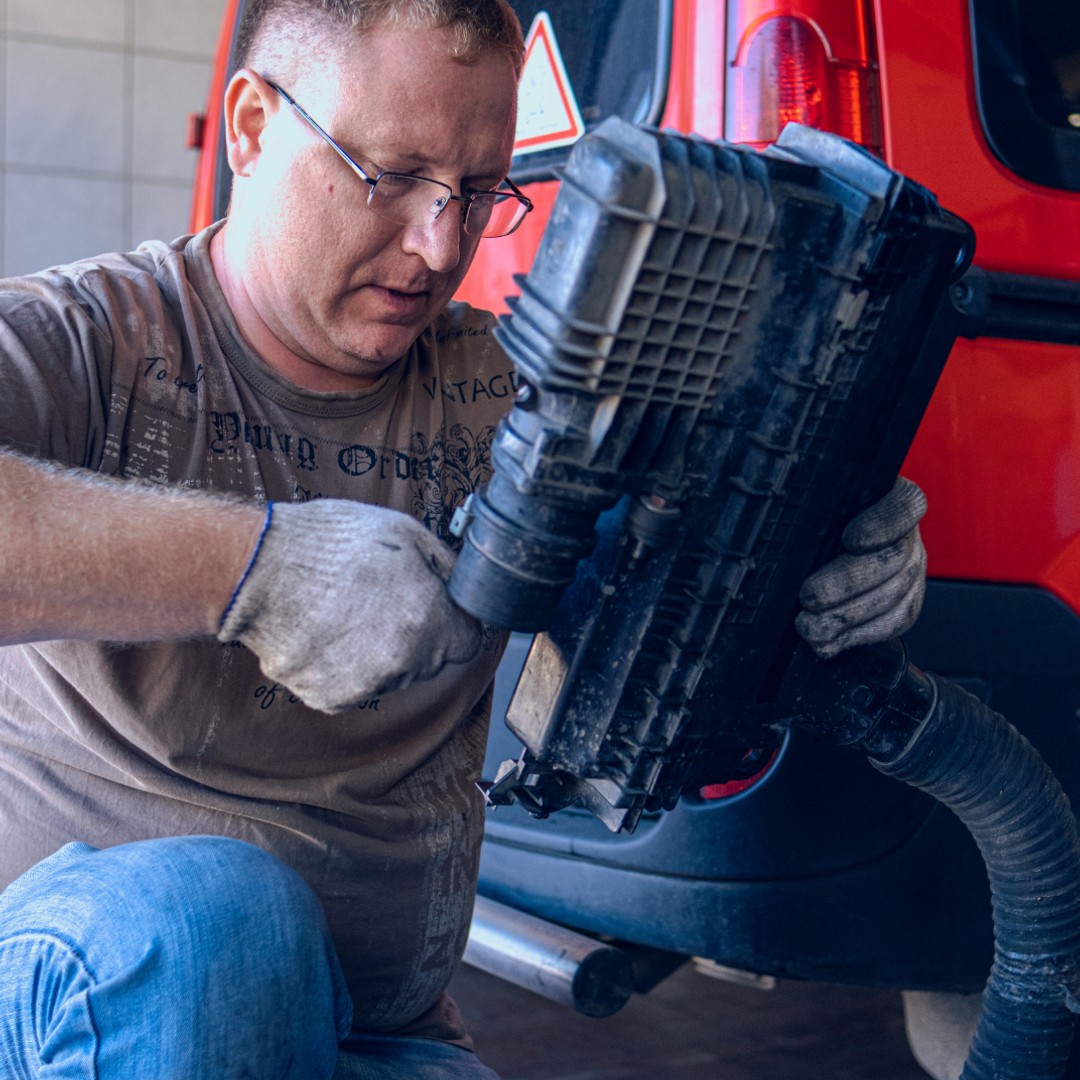
Diesel trucks are built to handle heavy loads, long routes, and demanding conditions, but they require regular maintenance to keep performing that way. Without a consistent service schedule, small issues tend to grow into larger ones that sideline your vehicle at the worst possible time. For owner-operators and fleet managers alike, staying ahead of maintenance is one of the most practical ways to protect your equipment investment and keep trucks on the road.
Understanding which maintenance tasks matter most helps you make smarter decisions about scheduling and spending. Not every service item carries the same weight, and knowing what to prioritize can mean the difference between a truck that runs reliably for years and one that spends more time off the road than on it. This article walks through the maintenance items that have the biggest impact on diesel truck performance and longevity.
Engine Oil and Filter Changes Keep Diesel Running Clean
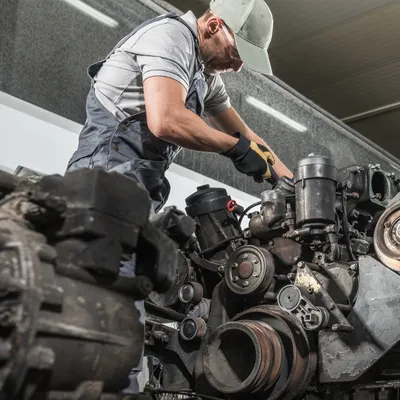
Engine oil is the most fundamental part of diesel truck maintenance, and it does far more than lubricate moving parts. Clean oil carries away heat, suspends contaminants, and forms a protective film between metal surfaces. As oil ages, it breaks down and loses its ability to perform those functions. Running a diesel engine on degraded oil accelerates wear on bearings, camshafts, and cylinder walls in ways that are expensive to repair.
Most heavy-duty diesel engines require oil changes based on mileage, engine hours, or a combination of both. The correct interval depends on the engine make, the type of oil used, and the operating conditions. Trucks running in extreme heat, carrying heavy loads, or idling frequently may need more frequent changes than the standard interval suggests. Always follow the manufacturer's recommendation and track service records carefully.
Pairing the oil change with a filter replacement is equally important. A clogged or worn filter allows contaminated oil to circulate through the engine, which defeats the purpose of fresh oil entirely. Changing the filter at every oil service is standard practice and a small cost compared to the protection it provides over the life of the engine.
Fuel System Service Prevents Power Loss and Damage
Brake maintenance on a diesel truck is not something to push to the back of the list. Commercial trucks carry significant weight, and the braking system works hard on every run. Brake pads, shoes, drums, and air brake components all wear with use, and letting them go too long between inspections increases stopping distances and raises the risk of a serious failure on the road.
Air brake systems in particular require regular attention. Slack adjusters, brake chambers, and air lines need to be checked for wear, leaks, and proper adjustment. A truck with an air brake issue may still move, but it is not safe to operate under load at highway speeds.
Scheduling brake inspections as part of routine service rather than waiting for a warning sign is the smarter approach. A technician who checks the full brake system on a regular interval can catch worn components before they become a safety concern.
Fuel System Service Prevents Power Loss and Damage
Brake maintenance on a diesel truck is not something to push to the back of the list. Commercial trucks carry significant weight, and the braking system works hard on every run. Brake pads, shoes, drums, and air brake components all wear with use, and letting them go too long between inspections increases stopping distances and raises the risk of a serious failure on the road.
Air brake systems in particular require regular attention. Slack adjusters, brake chambers, and air lines need to be checked for wear, leaks, and proper adjustment. A truck with an air brake issue may still move, but it is not safe to operate under load at highway speeds.
Scheduling brake inspections as part of routine service rather than waiting for a warning sign is the smarter approach. A technician who checks the full brake system on a regular interval can catch worn components before they become a safety concern.
Transmission fluid breaks down with heat and use, losing its ability to protect moving parts and transfer power smoothly. Checking fluid condition regularly and changing it on schedule keeps your transmission shifting cleanly and helps you avoid costly internal failures. Coolant also degrades over time, becoming acidic and less effective at managing engine temperature, which puts stress on hoses, seals, and the radiator itself.
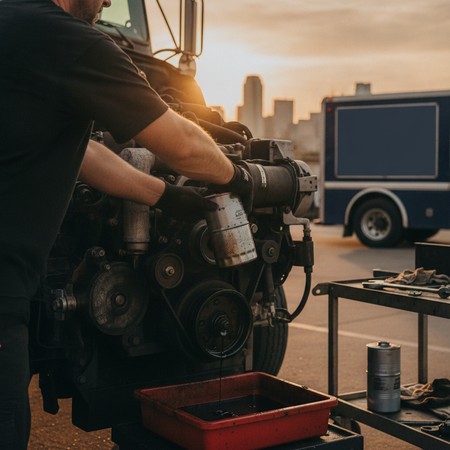
Air filters are another item that gets overlooked more often than it should. A clogged air filter reduces airflow to the engine, which affects fuel combustion and can lower power output over time. On diesel trucks operating in dusty or high-traffic environments, filters may need attention more frequently than the standard interval suggests. Checking these items during every service visit keeps the engine breathing properly and supports consistent fuel efficiency across the life of the vehicle.
Brake and Tire Service Protect Safety and Uptime
Commercial truck brakes endure tremendous stress, especially on routes with frequent stops, steep grades, or heavy loads. Brake pads, shoes, drums, and rotors all wear over time, and the rate of wear depends heavily on operating conditions. Inspecting brake components at regular intervals allows worn parts to be identified and replaced before they compromise stopping distance or damage more expensive components like drums and rotors.
Air brake systems require additional attention beyond lining thickness. Air dryers, chambers, slack adjusters, and glad hands all need periodic inspection to confirm the system holds pressure correctly and responds as intended. A brake system that passes a quick visual check can still have air leaks or moisture contamination that affects performance under load. Thorough brake inspections go beyond surface checks and test the full system for function and integrity.
Tire maintenance on commercial trucks involves more than checking pressure. Tread depth, sidewall condition, irregular wear patterns, and wheel alignment all affect tire life, fuel economy, and handling. Uneven wear often signals an alignment issue or suspension problem that will continue damaging tires until the root cause is addressed. Rotating tires, maintaining proper inflation, and inspecting for damage at each service stop protects both the tires and the vehicle's overall performance and safety.
Cooling System and Electrical Checks Prevent Failures
The cooling system in a diesel truck manages extreme heat produced by the engine during normal operation. Coolant degrades over time, losing its ability to prevent corrosion and maintain the correct freeze and boil points. Flushing and replacing coolant at the manufacturer's recommended interval prevents scale buildup inside the engine block and radiator, which can restrict flow and cause overheating.
Hoses, clamps, and the radiator itself should be inspected for wear, cracking, or soft spots during each major service. A failing hose that is caught during an inspection costs very little to replace. The same failure on the road can overheat the engine within minutes and result in serious internal damage.
Electrical systems on modern diesel trucks control everything from engine management to lighting and emissions controls. Battery terminals, alternator output, and wiring connections should be checked regularly to confirm the system charges correctly and delivers consistent power to all components.

When your maintenance schedule is consistent, you also create a clear service history for each vehicle in your fleet. That documentation matters when you need to make warranty claims, sell a unit, or prove to a client that your trucks are properly maintained. Many fleet managers underestimate how much a clean maintenance record affects resale value and operational credibility.
The good news is that staying current with diesel truck maintenance does not have to be complicated. Working with a mobile service provider means technicians come to your location on a schedule that fits your operation. You avoid the downtime of dropping trucks at a shop, and service gets done without interrupting your routes or delivery commitments. Over time, that consistency pays off in fewer breakdowns, lower repair costs, and trucks that stay reliable mile after mile.
Building a Maintenance Schedule That Protects Your Trucks
Diesel truck maintenance does not need to be overwhelming. The key is breaking it down into consistent intervals and making sure each service visit covers the right items for your vehicle's mileage, load, and operating conditions. Trucks that follow a structured maintenance schedule simply perform better and cost less to operate over time.
For fleet operators, the stakes are even higher. When multiple vehicles are on the road daily, a single breakdown can affect your schedule, your clients, and your bottom line. Building a maintenance program around your fleet's actual usage means you are not guessing at intervals or reacting to problems after they have already caused downtime. Mobile service makes that easier by bringing qualified technicians directly to your yard or location.
Reach out to our team to set up a maintenance plan that fits your trucks and your schedule. Whether you have one vehicle or a full fleet, consistent service from experienced diesel technicians is one of the best investments you can make in the long-term reliability of your operation.
Dallas Heavy Duty Service
Mobile Truck Repair & Mobile Truck Maintenance
Stay Current With Our Articles
Get the latest truck repair tips and fleet maintenance advice delivered to your inbox.
Stay Current With Our Articles
Get the latest truck repair tips and fleet maintenance advice delivered to your inbox.
Contact Info
Service Hours
Social Media
Mon-Fri: 24 Hours
Saturday: 24 Hours
Sunday: 24 Hours



Licensed & Insured

Connect With Our Socials
Contact Info
Service Hours
Mon-Fri: 24 Hours
Saturday: 24 Hours
Sunday: 24 Hours
Social Media
Licensed & Insured
©2026 Dallas Heavy Duty Service
Powered by: Customers Plus
Powered by: Customers Plus
Powered by: Customers Plus