



Mobile Diesel Truck Repairs: Keep the Fleet Moving
How Mobile Diesel Repair Keeps Your Fleet Running

FSDAVCFEBFEVSDDVFSD

FSDAVCFEBFEVSDDVFSD

FSDAVCFEBFEVSDDVFSD
Why Fleet Managers Choose Mobile Truck Repair Services
When a commercial truck goes down, every hour it sits idle costs money. Traditional repair shops require towing, intake paperwork, and waiting in a service queue behind other vehicles. For fleet managers juggling schedules and delivery windows, that process creates real operational pressure that a phone call and a tow cannot easily fix. Mobile diesel repair removes most of those steps by bringing the technician and equipment directly to the truck.
This approach works well for a wide range of situations. A truck parked at a freight yard with a fuel system fault, a unit sitting at a loading dock with brake issues, or a rig that broke down on a side street can all receive professional diagnosis and repair on the spot. No tow. No shop wait. Just a qualified technician showing up with the tools and parts to get the job done.
Why Fleet Managers Choose Mobile Truck Repair Services
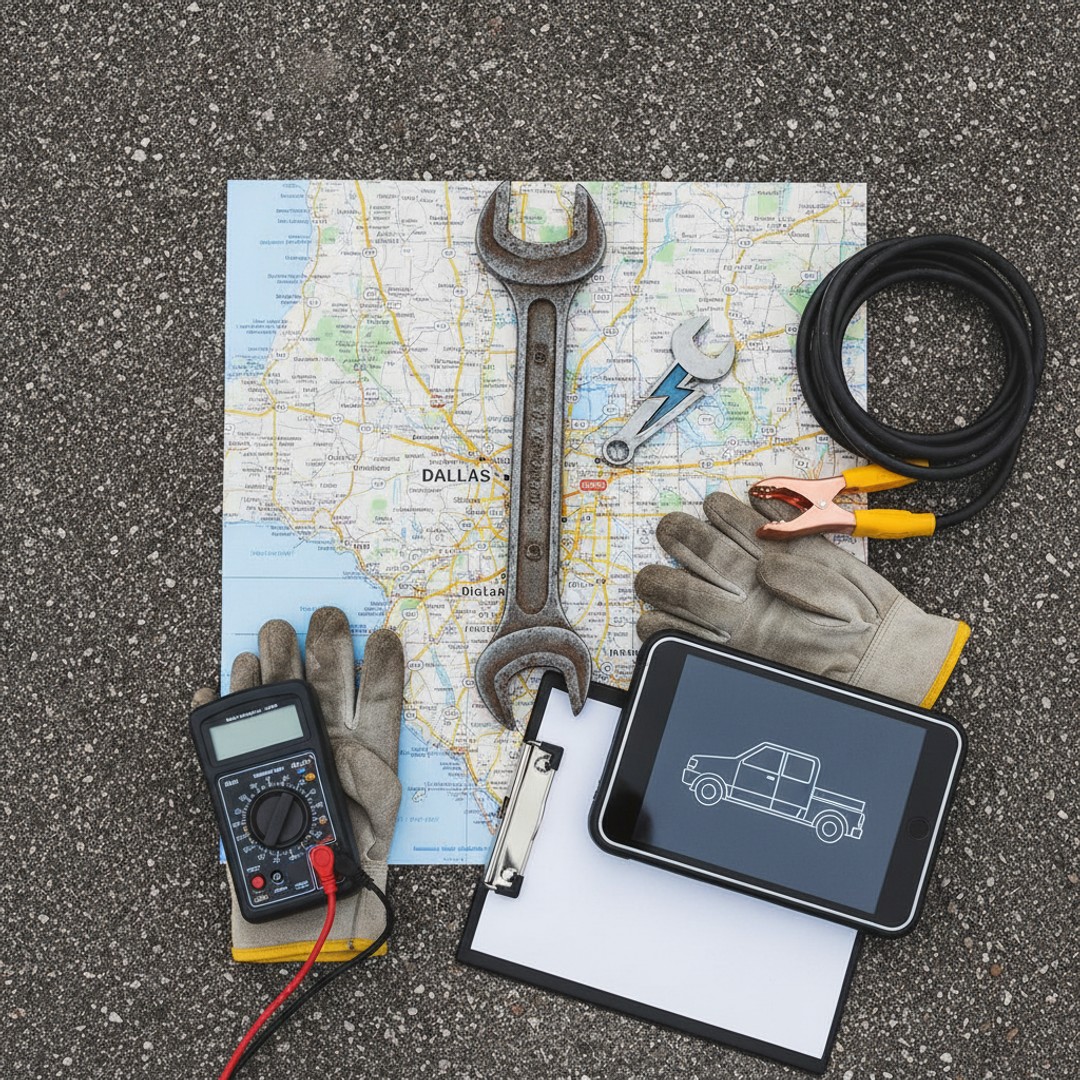
When a commercial truck goes down, every hour it sits idle costs money. Traditional repair shops require towing, intake paperwork, and waiting in a service queue behind other vehicles. For fleet managers juggling schedules and delivery windows, that process creates real operational pressure that a phone call and a tow cannot easily fix. Mobile diesel repair removes most of those steps by bringing the technician and equipment directly to the truck.
This approach works well for a wide range of situations. A truck parked at a freight yard with a fuel system fault, a unit sitting at a loading dock with brake issues, or a rig that broke down on a side street can all receive professional diagnosis and repair on the spot. No tow. No shop wait. Just a qualified technician showing up with the tools and parts to get the job done.
What Types of Repairs Can Be Done On-Site
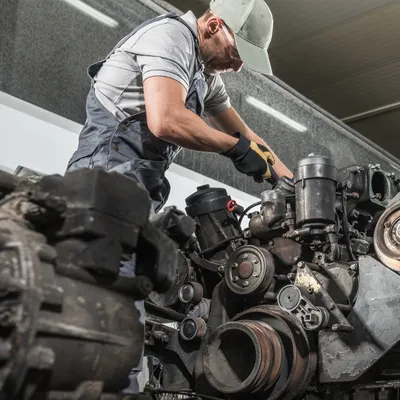
A common misconception about mobile truck repair is that it only covers simple roadside fixes like tire swaps or jump-starts. In reality, a well-equipped mobile diesel technician can handle a much broader scope of work directly at the truck's location. Brake system service, air system diagnostics, oil and fluid changes, belt and hose replacements, electrical fault diagnosis, and DPF-related issues are all jobs that experienced technicians complete in the field every day.
Advanced diagnostic tools are a key part of this capability. Modern commercial trucks rely on complex electronic control systems, and diagnosing fault codes on-site requires the same equipment used in a shop environment. Mobile technicians carry laptop-based diagnostic platforms and manufacturer-specific software to read and clear fault codes, monitor live data, and pinpoint the root cause of a problem before any parts are ordered or installed.
Engine-related work, including injector testing, cooling system repairs, turbocharger inspections, and minor head work, can also be addressed in the field depending on the severity of the issue. While some repairs still require a full shop environment, the range of what a skilled mobile team can handle continues to grow as tooling and parts availability improve.
Scheduling Mobile Service Around Your Fleet's Needs
One of the less obvious advantages of mobile diesel repair is scheduling flexibility. A fleet that operates around the clock cannot always pull trucks off the road during standard business hours without affecting routes or delivery commitments. Mobile service can be scheduled during off-peak hours, overnight, or on weekends so the truck is ready when the driver needs it.
Preventative maintenance is especially well-suited to this model. Instead of batching trucks for a monthly shop visit, fleet managers can schedule oil changes, filter swaps, fluid checks, and safety inspections at the truck's home base or terminal. The truck stays in service, the maintenance gets done, and the shop queue is avoided entirely.
For fleets with multiple units, staggered mobile service appointments spread across a week or two can keep the maintenance current without taking several trucks out of rotation at once. It is a practical approach that works around operations rather than against them.
Scheduling Mobile Service Around Your Fleet's Needs
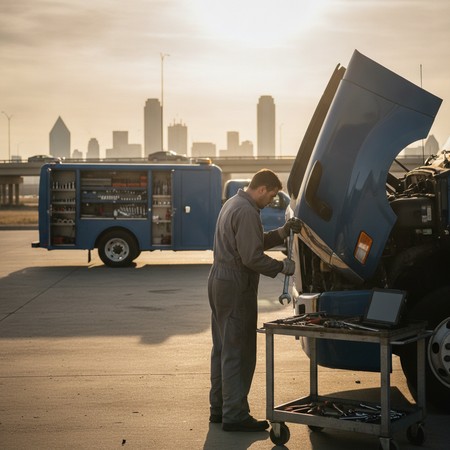
One of the less obvious advantages of mobile diesel repair is scheduling flexibility. A fleet that operates around the clock cannot always pull trucks off the road during standard business hours without affecting routes or delivery commitments. Mobile service can be scheduled during off-peak hours, overnight, or on weekends so the truck is ready when the driver needs it.
Preventative maintenance is especially well-suited to this model. Instead of batching trucks for a monthly shop visit, fleet managers can schedule oil changes, filter swaps, fluid checks, and safety inspections at the truck's home base or terminal. The truck stays in service, the maintenance gets done, and the shop queue is avoided entirely.
For fleets with multiple units, staggered mobile service appointments spread across a week or two can keep the maintenance current without taking several trucks out of rotation at once. It is a practical approach that works around operations rather than against them.
Technicians who work on commercial diesel equipment regularly develop a sense for problems that are not yet throwing codes. An experienced eye during a routine service call can catch a cracking serpentine belt, a corroded battery terminal, or a brake component showing early wear. These are exactly the kinds of findings that prevent a breakdown two weeks later. That diagnostic habit is one of the most practical advantages of working with a team that specializes in heavy-duty vehicles.
Documentation matters just as much as the repair itself. When every service call is logged with clear notes on what was found, what was done, and what should be watched next, fleet managers can make smarter scheduling decisions. A well-kept maintenance record also supports warranty claims and helps establish vehicle value over time. Good mobile service providers deliver both the repair and the paperwork that makes the whole operation easier to manage.
How Emergency Mobile Response Reduces Costly Fleet Downtime
Keeping a fleet moving starts with understanding what actually causes unplanned downtime. For most commercial truck operations, the answer is deferred maintenance. Small problems like worn belts, low coolant levels, or dirty fuel filters get pushed back week after week until they become expensive failures on the side of a highway. The cost of that deferred work is almost always higher than the original service would have been, and the lost time is harder to recover.
Mobile diesel repair changes how fleet managers can respond to these situations. Instead of waiting for a truck to come in or arranging a tow, a technician comes to the truck. That means repairs happen at a yard, a job site, a loading dock, or wherever the vehicle is parked. Downtime shrinks because the truck does not have to leave the road waiting for a shop opening.
The types of repairs handled on-site cover more ground than many fleet managers expect. Diagnostics, brake service, oil changes, electrical work, cooling system issues, and emergency roadside calls can all be completed without ever moving the truck to a traditional shop. That range of capability is what makes mobile service a practical, reliable choice for busy commercial operations of any size.
Building a Long-Term Mobile Maintenance Plan for Fleets
Fleet managers who schedule maintenance proactively rather than reacting to failures tend to see lower overall repair costs. When a technician inspects a truck on a regular schedule, problems surface earlier and the repairs are less involved.
Owner-operators benefit from the same approach, even with a single truck. A vehicle that receives consistent attention is less likely to leave a driver stranded and more likely to pass inspections without surprises. The upfront investment in scheduled service is almost always smaller than the cost of an emergency call.
Mobile service makes consistent maintenance easier to stick to because the scheduling friction is low. A technician comes to the truck, completes the work, and the driver gets back on the road. There is no waiting room, no trip across town, and no extended time out of service.
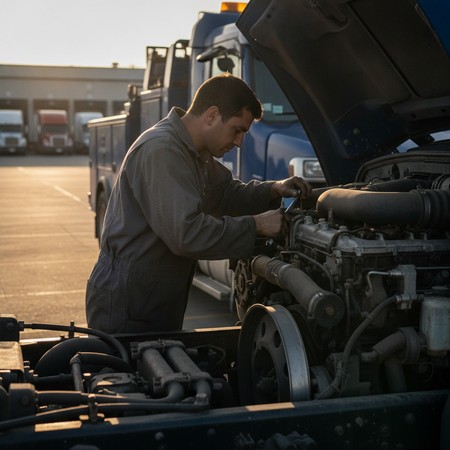
Selecting a mobile diesel service provider is a decision worth taking seriously. Ask about technician certifications, diagnostic equipment, and whether the team carries the parts most commonly needed for your truck makes and models. A provider who shows up prepared moves faster and keeps your trucks in service longer. References from other fleet operators in your area can also tell you a lot about how a provider actually performs under pressure.
The right provider becomes a working partner, not just a vendor you call in emergencies. They track service history, flag upcoming needs before they become failures, and communicate clearly about what was done and why. Over time, that relationship pays off in fewer breakdowns, lower repair costs, and a fleet that runs more predictably. For owner-operators and large fleets alike, that kind of dependable support is worth building early.
Keeping Your Fleet Reliable with Mobile Diesel Service
Mobile diesel truck repair is not just a convenience. For fleets that depend on vehicle uptime, it is a practical strategy for controlling costs, maintaining schedules, and reducing the unpredictability that comes with traditional shop-based repairs. The ability to receive professional service at the truck's location, on a schedule that works for the operation, changes how fleet maintenance can be approached.
The key is working with a team that has the experience, equipment, and parts inventory to handle a wide range of jobs in the field without sending trucks back and forth to a shop. Not every mobile service provider operates at the same level, so it is worth asking about diagnostic capabilities, parts availability, technician certifications, and the range of work they routinely perform on-site before committing to a service relationship.
Dallas Heavy Duty Service brings 37 years of heavy-duty diesel experience to every mobile repair and maintenance visit. Whether it is a single truck needing roadside help or a fleet requiring scheduled on-site service, our team shows up ready to work and focused on getting your vehicles back on the road as quickly and safely as possible. Reach out to learn how we can support your operation.
Dallas Heavy Duty Service
Mobile Truck Repair & Mobile Truck Maintenance
Stay Current With Our Articles
Get the latest truck repair tips and fleet maintenance advice delivered to your inbox.
Stay Current With Our Articles
Get the latest truck repair tips and fleet maintenance advice delivered to your inbox.
Contact Info
Service Hours
Social Media
Mon-Fri: 24 Hours
Saturday: 24 Hours
Sunday: 24 Hours



Licensed & Insured

Connect With Our Socials
Contact Info
Service Hours
Mon-Fri: 24 Hours
Saturday: 24 Hours
Sunday: 24 Hours
Social Media
Licensed & Insured
©2026 Dallas Heavy Duty Service
Powered by: Customers Plus
Powered by: Customers Plus
Powered by: Customers Plus