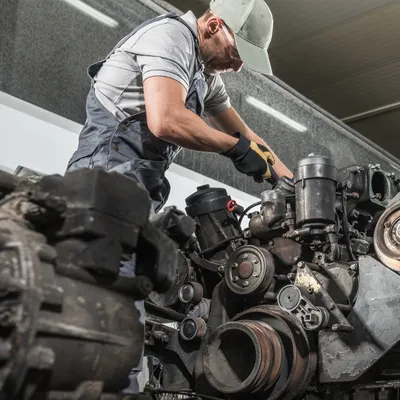






How Your Diesel Cooling System Works
Every diesel truck engine depends on a properly functioning coolant system to run at its best. The system carries one core responsibility: removing heat from the engine and regulating temperatures so the powerplant never runs too hot or too cold. In a heavy duty diesel producing serious power under load, that job never lets up, and even a small lapse in cooling performance puts every internal component at risk of expensive damage.
The cooling system is a closed loop of parts working in harmony. The radiator, water pump, thermostat, hoses, and the coolant itself all play a role. When the engine runs, the water pump circulates coolant through the block to absorb heat, then routes that hot fluid to the radiator where fresh air cools it before it cycles back. Most commercial engines use a wet sleeve design, so coolant contacts the cast iron liners directly.
Why Cooling Matters More In Diesel
Cooling systems in Class 6 through 8 trucks must dissipate heat from engines producing 400 to 600 horsepower while holding precise temperatures across wildly different conditions. One minute you are crawling through a construction zone, the next you are running sustained highway speeds. That range of thermal demand puts pressure on every component in the loop, and no single part can carry the load alone.
The stakes are higher than many operators realize. Roughly 40 percent of all engine problems in heavy duty diesels trace back, directly or indirectly, to improper cooling system maintenance. The frustrating part is that most coolant related failures are entirely preventable. Modern engine technology only raises the stakes, since components like EGR coolers place greater thermal stress on the coolant and can accelerate the breakdown of glycol.
A healthy cooling system does more than protect the block. Many diesel engines rely on coolant to oil heat exchangers, so the coolant also controls oil temperature. When cooling performance slips, oil performance degrades right alongside it. That interconnection is why we treat coolant service as core preventive maintenance rather than an afterthought, and why a minor cooling issue deserves attention before it snowballs.
Top Causes Of Coolant System Failure
Coolant does not last forever. Over time it loses its corrosion inhibitors and heat transfer properties, and running degraded antifreeze accelerates rust buildup in radiators and water jackets. That reduces cooling efficiency and raises overheating risk. Dirt, debris, and insects packing radiator fins compound the problem by restricting airflow, forcing the engine to run hotter under load.
Rubber hoses crack, bulge, and leak as they age, and repeated heating and cooling cycles cause material fatigue in hoses and seals until they finally fail. Sudden coolant loss during operation triggers rapid temperature spikes, emergency shutdowns, and towing bills. Using the wrong coolant type for the engine causes similar damage, since different engines require specific formulations to stay protected.
Additive dropout is a quieter culprit. When additives become unstable, they leave the system unprotected against corrosion and can settle in cooler engine areas, blocking heat transfer. This happens from contamination, over treatment of SCAs, or an improper mix of water, glycol, and inhibitors. A failing fan clutch is another common offender, either never engaging the fan or never disengaging it.
The fan clutch deserves special attention because it ranks among the most common failure points on heavy and medium duty cooling systems. It is the mechanism that engages and disconnects the cooling fan based on demand. When it fails in the disengaged position, the fan never spins up, and not enough cool air moves through the radiator during the moments the engine needs it most, such as steep grades or slow port traffic. When it fails locked in the engaged position, the fan runs constantly and drags down fuel mileage significantly, quietly costing you money on every mile you drive.
External damage is another real threat on the road. Flying road debris can puncture a radiator or damage other cooling components without warning, and once the system loses its ability to hold coolant, temperatures climb fast. The pressure cap is often overlooked in all of this. A cap that no longer holds correct pressure, typically 13 to 16 PSI on commercial diesels, lets the coolant boil at a lower temperature and can mimic a far more serious failure. Checking that inexpensive cap is one of the smartest habits an operator can build.
Warning Signs You Should Never Ignore
Know your truck's normal operating temperature, generally between 180 and 220 degrees Fahrenheit for a diesel, and watch closely for readings that climb unusually high or trigger a warning. Temperature instability is often the very first indicator. An engine that holds steady during light use but spikes under load is telling you it has lost cooling efficiency, and that message deserves a response.
Other signals show up in ways you can see and smell. Low coolant warnings, visible fluid under the truck, a sweet odor, and a constant need for top offs all point to a cooling problem. White smoke from the exhaust that persists after warmup, especially with a sweet smell, means coolant is burning in the combustion chamber and has already crossed into the combustion side of the engine.
The most urgent sign of all is oil that looks milky, grey, or frothy. That texture means coolant has contaminated the oil, and contaminated oil loses nearly all of its lubricating ability. Also watch for temperature swings during hill climbs, wet hoses, and a cab heater that blows cool air while the engine runs hot. Any of these warrants an immediate stop and inspection.
What Happens When Cooling Fails
When a diesel engine overheats, the internal damage can be severe. Warped cylinder heads, blown head gaskets, and scored or cracked internal components are all on the table. Once those parts distort, the repair moves from routine service into major engine work, which is exactly the outcome preventive maintenance is designed to avoid.
Wet sleeve engines face a specialized threat called cavitation. Combustion causes the liners to vibrate rapidly, producing tiny vapor bubbles on the liner wall that implode with enough force to chip away at the sleeve. Left unchecked, those cavities eventually perforate the liner and allow coolant to mix with oil, a potentially catastrophic situation for the engine.
Because coolant also regulates oil temperature through heat exchangers, a cooling failure rarely stays contained to one system. A single neglected leak or degraded batch of antifreeze can cascade into oil breakdown, accelerated wear, and a chain of related problems. That interconnection is precisely why we push operators to act on early symptoms rather than waiting for a warning light.
A proper coolant repair is about more than replacing the failed part. After any repair or refill, air pockets can become trapped in the system, and those pockets prevent proper circulation and cause localized overheating even when the reservoir reads full. Bleeding that trapped air is a non negotiable final step, and skipping it is a common reason a truck comes back overheating shortly after service. Our technicians treat bleeding the system as part of every completed coolant job, not an optional extra.
Stop leak sealants have their place, but only a limited one. These additives circulate through the system and form a temporary seal around small cracks or pinholes, which can get a truck to a safe location. They should never be viewed as a permanent fix. For wet liner engines especially, supplemental coolant additives may be necessary to control cavitation, corrosion, and scale, and those SCAs need to be monitored and maintained at proper levels based on OEM recommendations rather than guesswork.
Mobile Coolant Repair Across California
Heavy duty trucks working California face constant thermal demands from port activity, extended highway runs, and grinding stop and go traffic. Coolant systems have to hold precise temperature control to keep engines safe, and the state's high heat only intensifies the load. Long idle times, steep grades, and heavy daily use all raise the odds of a roadside failure, which is why staying ahead of cooling problems matters so much for fleets operating here.
Breakdowns in California can be especially painful because of high temperatures, remote stretches of roadway, and limited repair options nearby. Diesel vehicles working these routes routinely suffer heat related stress on cooling systems, batteries, fuel systems, and emissions components. Dallas Heavy Duty Service brings the shop to you, so a cooling issue in a yard, at a job site, or in a parking lot does not have to end with an expensive tow to a distant facility.
Coolant problems almost always develop gradually before they turn critical. A minor leak, a clogged radiator, or a failing thermostat stresses the engine well before any warning light activates. Our mobile truck repair, mobile maintenance, and emergency repair services let operators address these issues on site, whether it is a scheduled coolant flush, a fan clutch replacement, or an urgent roadside fix. Catching the small stuff early is how we keep trucks earning instead of sitting.